
Shivoham Fabtech manufactures Glass Fiber Geogrid – an open mesh reinforcement fabric manufactured from high-strength alkali – free glass fiber yarns using European woven technology, coated with thermally stable modified polymer.
Designed as a pavement interlayer system for asphalt overlay reinforcement in roads, highways, and airports. The proprietary polymer coating bonds mechanically with asphalt layers and protects the glass fiber grid during paving, with a coating melting point of > 250°C and a glass fiber melting point of > 820°C. Available in grades from 50 kN/m to 200 kN/m, spanning four specialized series: Regular, Self-Adhesive (PSA), Light Geocomposite (GLC), and Heavy Geocomposite (GHC).
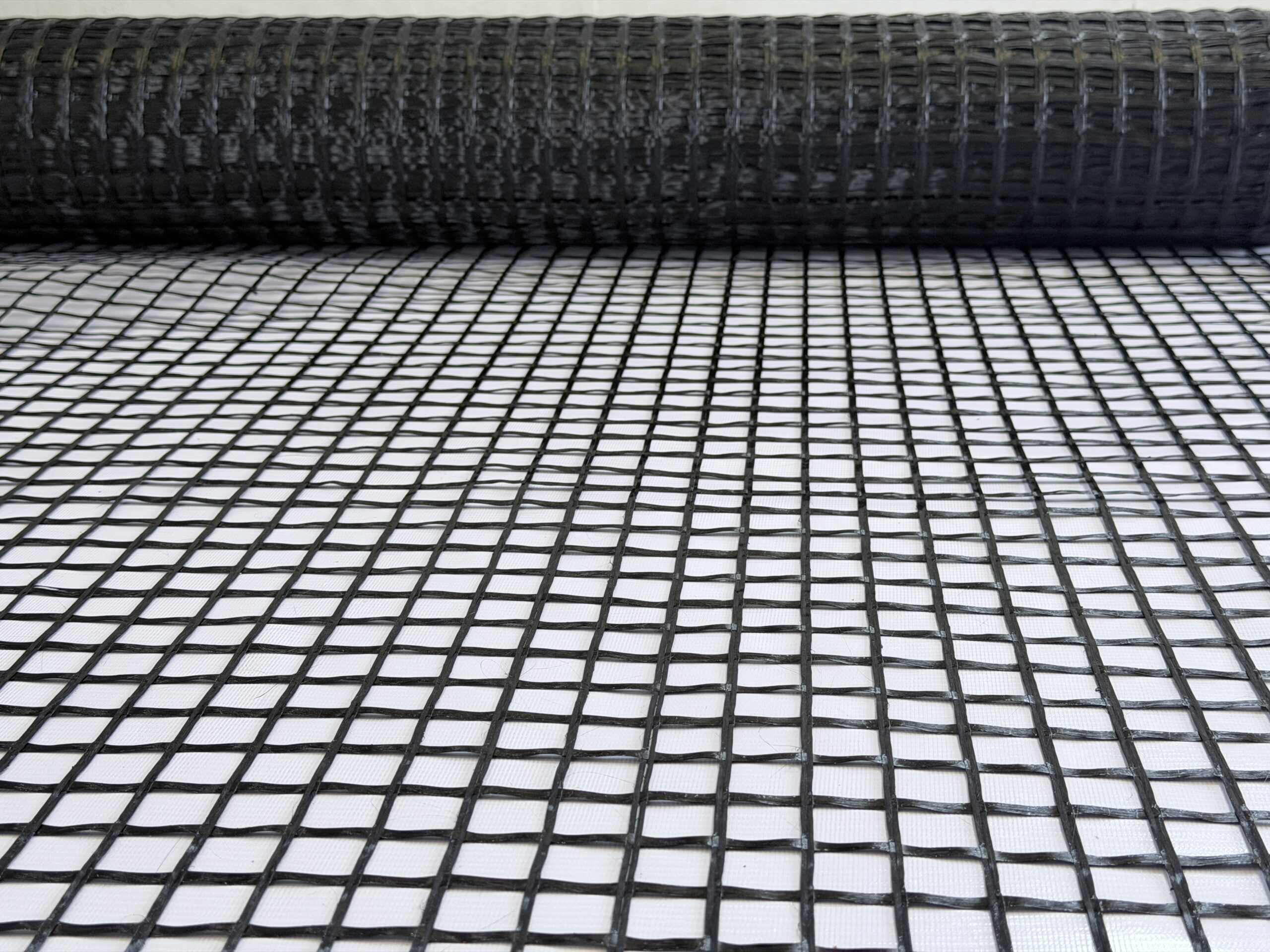
Glass Fiber Geogrid – Available Range
The TarGrid™ series is available in multiple tensile grade configurations to suit different pavement design requirements. TRG R50 is suitable for standard asphalt overlay reinforcement, while the TRG R100 and TRG R200 grades are used for heavier-load applications such as airport runways and high-traffic highway rehabilitation. We offer Plain Grids, Self-Adhesive (PSA) variants for rapid installation, and Geocomposites (GLC & GHC) that bond a non-woven paving fabric to the grid – providing high-tensile reinforcement and a stress-relieving moisture barrier in a single layer.
TarGrid™ – Glass Fiber Geogrid – Technical & Performance Properties
High Tensile Strength at Working Strains
TarGrid™ is engineered to hold its shape and provide immediate reinforcement the moment it is installed. Its high tensile modulus and ultra-low elongation (< 4%) ensure reliable load distribution across the pavement layer, keeping the structure stable under repeated traffic throughout its service life.
Thermally Stable Polymer Coating
The glass fiber yarns are coated with a thermally stable modified polymer that is fully compatible with hot-mix asphalt paving. The grid retains its geometry and integrity during laying and compaction, ensuring consistent performance from installation through to the end of the pavement’s design life.
Alkali & Weathering Resistance
The protective polymer coating shields the glass fiber yarns from UV radiation, alkalis, soil chemicals, and weathering—making the TarGrid™ series suitable for placement directly on both asphalt and cement concrete surfaces without performance loss over time.
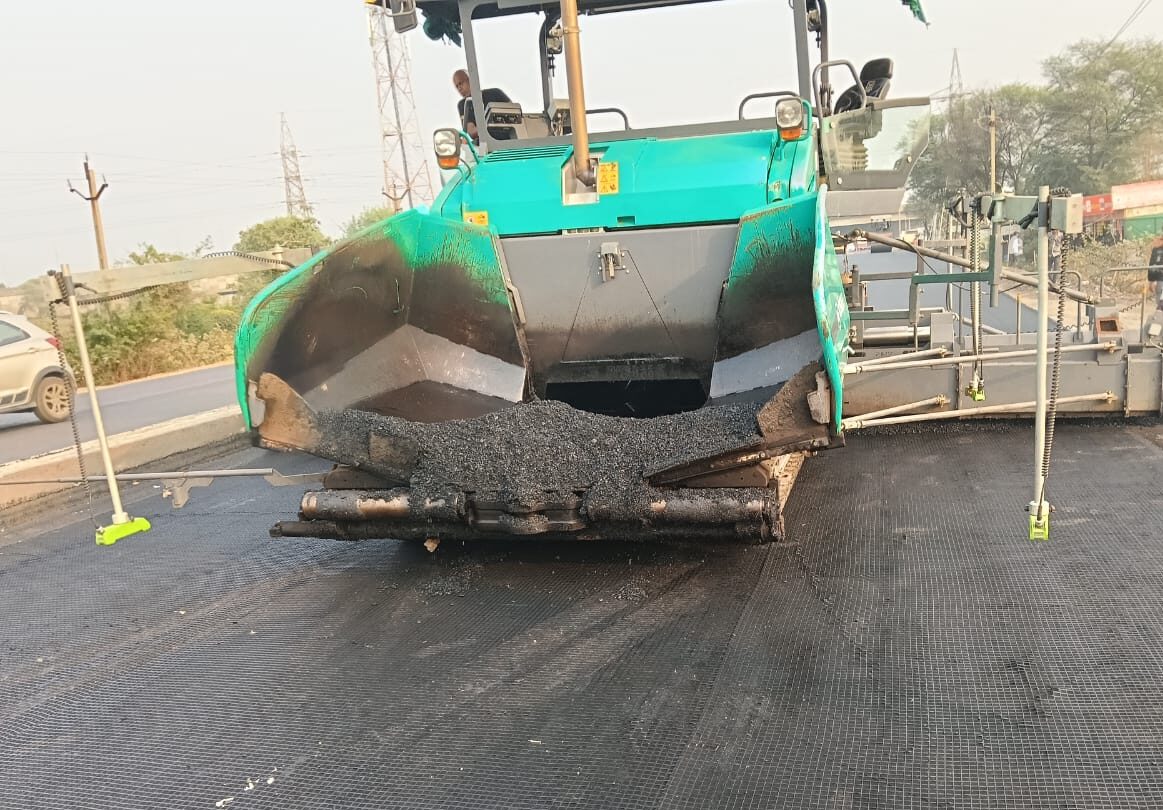
Why Engineers Specify our TarGrid™ – Glass Fiber Geogrid?
Extending Pavement Lifespan with Advanced Interlayer Technology
Glass Fiber Geogrid is available in multiple tensile grade configurations to suit different pavement design requirements. The TRG 50 grade is suitable for standard asphalt overlay reinforcement, while the TRG 100 and TRG 200 grades are used for heavier-load applications such as airport runways and high-traffic highway rehabilitation. Both standard grid and geocomposite (GLC & GHC) variants are available. Geocomposite variants bond a polypropylene nonwoven geotextile to the grid — providing reinforcement and a stress-relieving interlayer function in a single layer.
Where Is Glass fiber Geogrid Used?
Applications in Civil Infrastructure
Quality & Testing Certifications
Our products undergo rigorous testing at NABL and GAI-LAP accredited laboratories, ensuring full compliance with industry standards. Supported by comprehensive quality and testing certifications, our materials meet stringent performance and reliability requirements.